When I was a child, my mom introduced us to eggplant in two ways I rarely see prepared and eaten today. Most of the time, she cut the eggplant into small chunks, sautéed them with diced onions, and added a few eggs to make an eggplant scramble. Other times, she peeled and grated the eggplant, mixed it with flour, an egg, a little milk, onions, and seasonings, then fried the mixture into fritters. I wish I could say I loved eggplant back then, but I didn’t. It always tasted a little bitter, and that bitterness turned me off.
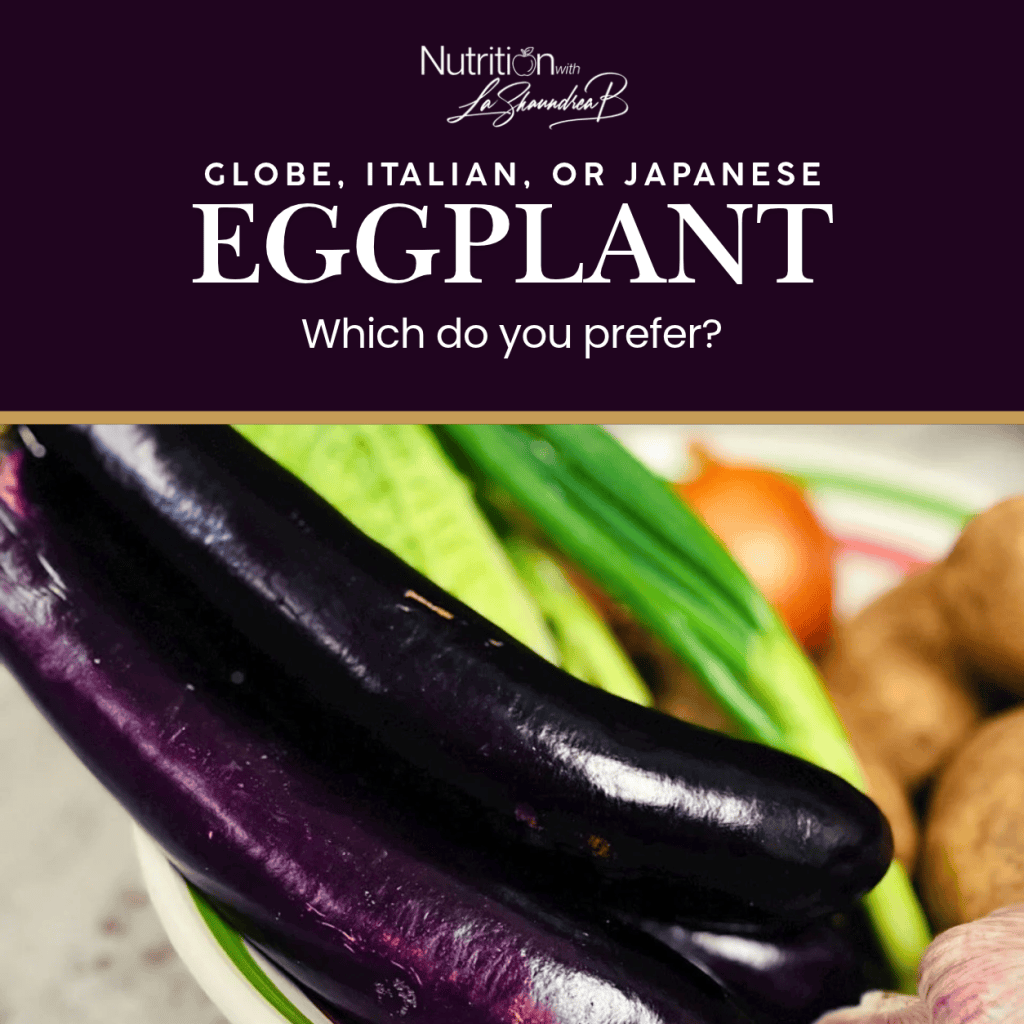
Many years later, culinary school reintroduced me to eggplant. There, I learned there are different types of eggplant. The three most common types are the globe, Italian, and Japanese. Globe eggplants are large, deep purple, and have a firm texture that works well in fritters. Italian eggplant looks similar to the globe, but it’s usually smaller, tender, and slightly sweeter—great for eggplant Parmesan. The Japanese eggplant is long and slender, has thin skin, fewer noticeable seeds, and a mild flavor. It’s the kind I reach for most often.
In culinary school, I also learned how to reduce that bitter taste I so detested as a kid, and this is how. Take an eggplant, slice it lengthwise or in rounds, sprinkle it with a little salt, and let it sit for about 5–10 minutes (depending on the thickness). Rinse off the salt with cool water, then cook it however you prefer. This not only reduces the bitterness but also helps draw out extra moisture. Note: I only do this with the globe eggplant. The others have a mild taste, and salting really isn’t necessary.
Today, I eat eggplant at least once a month, and I usually buy the Japanese kind. Unlike my mom, who made two eggplant dishes, I prepare mine several different ways. I sauté it with zucchini, grill it, roast it whole, add it to pizza, or make eggplant parmesan. A dish that I haven’t made in a while is ratatouille. If you’ve ever watched the animated movie “Ratatouille” and have eaten the dish, you know the restaurant critic’s experience was on point. Ratatouille is definitely a comfort food. Also, while in culinary school, I introduced my mom to caponata—a dish that became one of her favorites. Who knew capers, olives, and golden raisins went so well with eggplant? Smile.
Nutritionally, eggplant is low in calories (1 cup, raw = 20 calories). Its firm texture makes it a great meat substitute, and it pairs well with tomato sauce, garlic, onions, and herbs. You can roast, grill, sauté, or add it to casseroles and other dishes. Eggplant is also like a sponge and soaks up liquid and oil. So, be mindful of how much oil you use when sautéing or pan-frying it.
Here are a few ways I like to prepare my eggplant.

Which kind of eggplant do you prefer, and how do you like it prepared? Have you ever scrambled it with eggs or made it into fritters? Let me know in the comments!
Eat Well. Feel Well. Live Well.
~LaShaundreaB


Leave a Reply