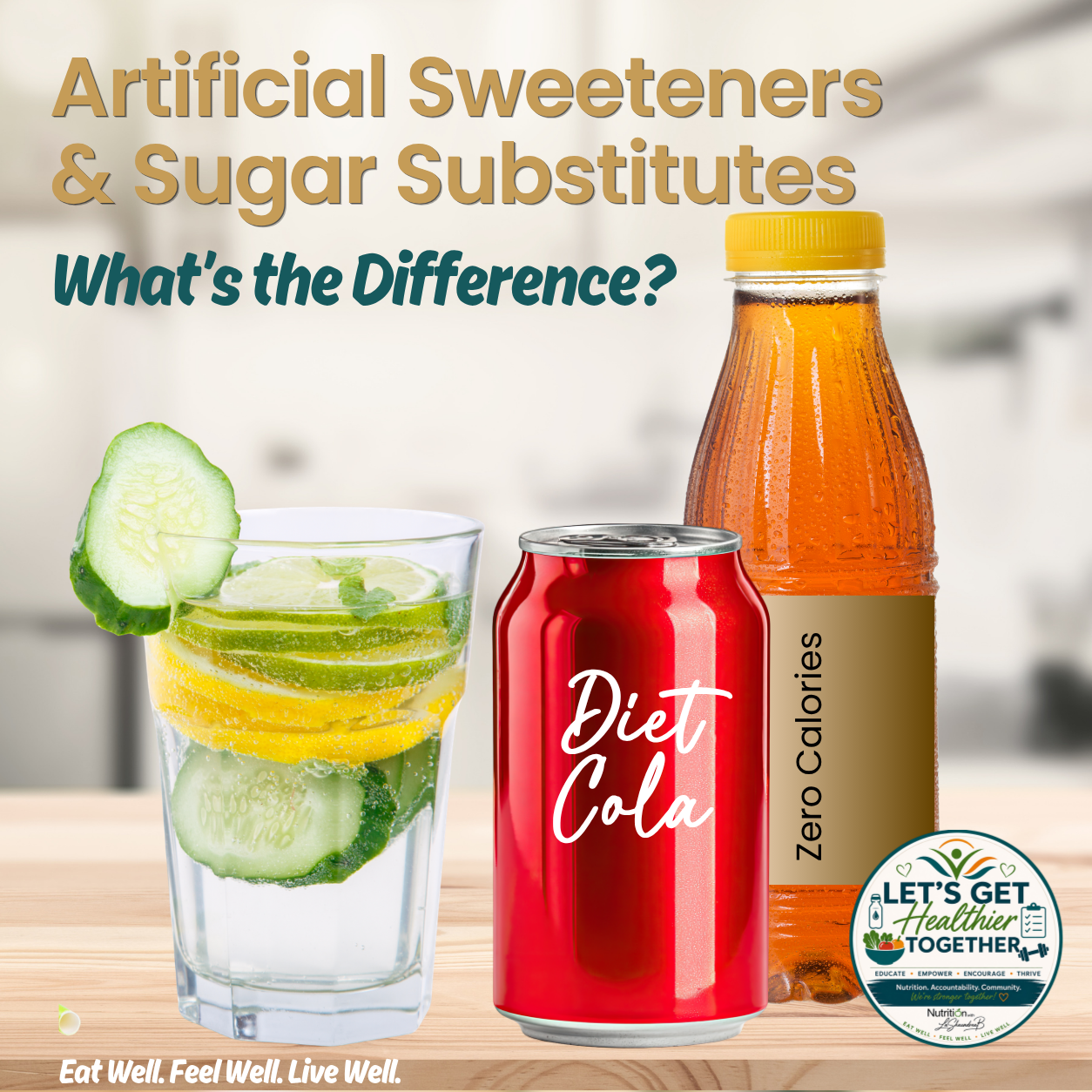
Have you ever picked up a beverage labeled “Zero Sugar,” “Diet,” or “No Sugar Added” and wondered what makes it taste sweet? If you haven’t, someone has, because I get this question quite often. Many people have questions about where the sweetness comes from, and whether sweeteners are plant-based or lab-made.
Well, here’s what we know-
- Beverages containing artificial sweeteners and sugar substitutes have less added sugar and are typically lower in calories. This is good if you’re trying to manage your diabetes or gradually cut back on sugar-sweetened beverages. That said, not all artificial sweeteners and sugar substitutes are the same, and understanding the difference can help you make informed choices.
- “No Sugar Added” means no sugar was added during processing. It doesn’t mean the product is sugar-free. For example, 100% fruit juice may carry this label but still contains naturally occurring sugars. “Added sugar” means sugar has been added to the beverage (or product). Always read the Nutrition Facts label and ingredient list.
Common artificial sweeteners and sugar substitutes you’ll find today:
• Stevia: Derived from the stevia plant. Zero calories. Found in flavored water and teas. May have a slight aftertaste for some people.
• Sucralose (Splenda®): A modified form of table sugar. Zero calories. Found in zero-sugar sports and protein drinks.
• Aspartame (Equal®, NutraSweet®): Lab-made from amino acids. Almost zero calories. Found in diet sodas and drink mixes. Safe for most, but people with PKU are advised to avoid it. (U.S. Food & Drug Administration. How Sweet It Is: All About Sweeteners.)
• Monk Fruit Extract: Made from monk fruit. Zero calories. Found in naturally sweetened beverages and sparkling waters. Often blended with other sweeteners.
Here’s my take on drinking beverages with artificial sweeteners or sugar substitutes. If replacing one regular soda with a diet soda helps you reduce added sugar as you transition to healthier habits, give it a try. However, the best alternative I would recommend is good, clean, refreshing water! Make water your beverage of choice. If you don’t like it plain, try sparkling or fruit-infused water.
Remember, healthy habits are built one choice at a time—not all at once.
Want more tips, plus weekly challenges and recipes? Subscribe to our newsletter at Nutrition with LaShaundreaB.
Ladies, if you’d like a safe space to discuss nutrition or other health topics, join our Facebook group: Let’s Get Healthier Together. No perfection required. Come as you are.
Eat well. Feel well. Live well. ~LaShaundreaB🍏


Leave a Reply